By the Valor Peak crew
Longmont, Colorado
What happens when grain becomes mash?
Production begins by preparing grain so water and enzymes can reach its starch. Grain is usually milled, then combined with water under controlled conditions. Cooking and enzymatic conversion help transform starch into sugars that yeast can use. Different grains need different handling, so mashing is more precise than simply stirring a pot of hot cereal.
Malted grain can supply enzymes, and distillers may use other permitted enzymes depending on their process. The goal is a consistent mash with useful fermentable sugars. Some producers ferment with grain solids present; others separate a liquid portion. Neither detail alone tells you the quality of the eventual whiskey. At Valor Peak, the process page gives a clear overview before you visit the working distillery.
What is a mash bill and why does it matter?
A mash bill is the mix of grains used to make a whiskey. Corn, rye, wheat and barley each bring different characteristics and production needs. A grain blend establishes a starting direction, but it does not function like a tasting guarantee. Yeast, still operation and the barrel can emphasize or soften that character.
Whiskey styles also have legal definitions, and some specify particular grain requirements. Those rules are useful context when reading a label, but the full production method matters more than a fashionable ingredient. We do not publish unconfirmed mash percentages for our bottles. You can still compare our Bourbon and American Single Malt by the impressions you notice. Ask the crew what role a grain plays rather than assuming one grain always makes a superior spirit.
How does yeast turn mash into a wash?
During fermentation, yeast consumes sugars and produces alcohol and carbon dioxide. It also creates aroma compounds that become part of the spirit's character. The fermented mixture is often called a wash or distiller's beer. It is a stage in production, not the finished whiskey, and its composition depends on the producer's method.
Temperature, yeast health and nutrients all affect the result. The crew monitors fermentation rather than assuming every batch behaves identically. Smell and taste can provide clues alongside production measurements. This is where a fruity or grain-forward foundation starts to take shape. A distillery tour connects this quieter stage to the more visible still, helping explain why good production depends on attention before any spirit reaches a barrel.
How are pot stills different from column stills?
Both systems use heat, vapor and condensation to separate and concentrate a fermented liquid. A pot still works in batches and may require more than one distillation depending on the desired result. A column uses repeated vapor and liquid contact within a series of stages. Some column systems operate continuously; configurations vary widely.
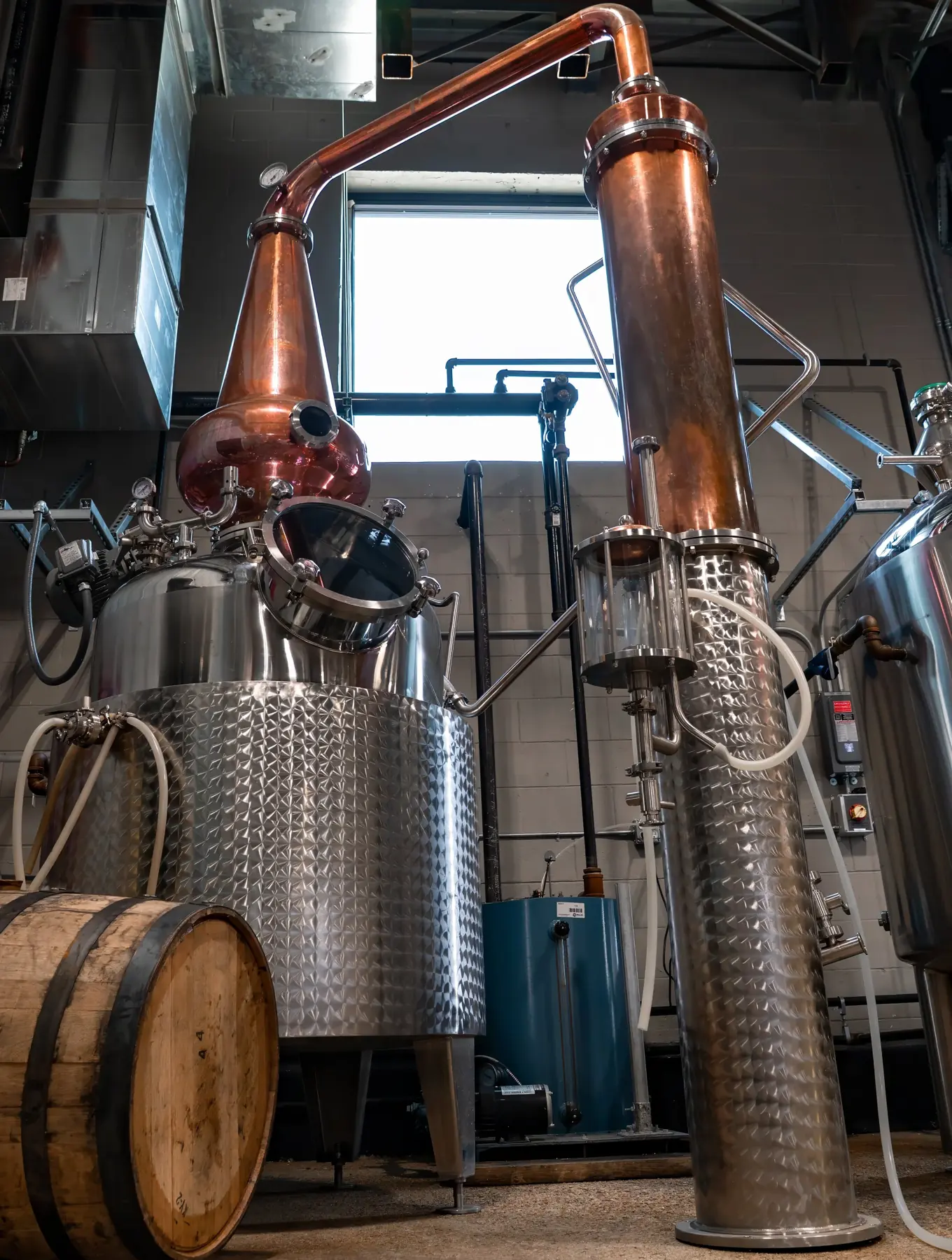
Neither design automatically makes a better whiskey. The equipment, operating choices and desired spirit style work together. Copper surfaces can help reduce certain unwanted sulfur compounds, but copper alone is not a quality certificate. Our copper pot still is part of the Longmont process. Avoid turning equipment names into a competition. Ask what character the distiller wants to preserve and how the still helps accomplish that goal.
“Every stage leaves something for the next stage to work with.”
What are heads, hearts and tails?
The composition of the condensed spirit changes during a distillation run. Distillers often discuss that progression as heads, hearts and tails. Earlier and later portions contain different balances of compounds. The central collection selected for the intended spirit is the heart, but choosing its boundaries involves experience, measurement and production standards.
Distillation is not a simple trick that makes an unsafe liquid safe because someone discarded one cup. Compounds overlap, and professional operation requires more knowledge than a tasting-room explanation can provide. For visitors, the useful idea is selection: the distiller chooses a character suited to the final drink. Careful decisions now influence how the spirit develops later. This guide explains the sequence, not instructions for making alcohol at home.
Why does whiskey go into oak barrels?
Newly distilled spirit generally comes off clear. Oak maturation can contribute color, vanilla-like aromas, spice and texture while allowing other changes to occur over time. In a charred barrel, the heat-treated interior presents different layers of wood for interaction. Barrel size, wood preparation, prior use and storage all influence the outcome.
Whiskey categories have different rules about barrel use, so do not assume every whiskey ages in the same type of cask. Some require new charred oak, while others permit different approaches. The spirit entering the barrel also matters. A barrel is not a flavor packet that produces an identical result every time. Our interactive Grain to Glass story shows this transition clearly, from a clear spirit to the changing liquid inside wood.
What changes while whiskey matures?
Maturation involves extraction from wood, reactions within the spirit and gradual exchange with the surrounding environment. Some liquid evaporates through the barrel, traditionally called the angel's share. Temperature and humidity influence that loss, and alcohol and water do not always leave at the same rate. Conditions can change the balance of the remaining whiskey.
The distiller checks development rather than relying on the calendar alone. A mature flavor is a balance between the underlying spirit and the barrel, not simply the darkest possible color. Colorado's climate gives our storage environment its own character, but no universal formula converts a season here into years somewhere else. The Colorado whiskey guide explains those influences without making exaggerated aging claims.
How does whiskey get ready for the bottle?
When a whiskey is ready, the producer may combine selected barrels or keep a particular barrel separate. Water can be added to reach the intended bottling strength. Producers may also use filtration appropriate to the style. Those finishing choices affect appearance, aroma and texture, so bottling is part of the process rather than an afterthought.
The finished bottle should tell you what style you are buying, while the crew can help explain how to enjoy it. We draw and bottle by hand in Longmont, with the same attention carried through from the earlier stages. Watch it happen in our Grain to Glass scroll journey, then book a tour to ask questions in person. A cocktail from our menu offers another way to understand how the spirit behaves once it leaves the distillery.
What else should you know?
Is whiskey clear before it goes into a barrel?
Newly distilled spirit generally comes off clear. Much of the familiar color develops during contact with oak. Appearance alone does not establish age or quality.
Does every whiskey use the same grains?
No. Grain choices vary by style and producer. A mash bill describes that mix, while fermentation, distillation and maturation also shape the finished character.
Can climate speed up aging?
Climate changes how spirit and wood interact and how liquid evaporates. That does not create a reliable conversion between time in different places. Maturity is more complex than faster extraction.
Where can I see the whole journey?
Open the Valor Peak Grain to Glass story for an illustrated scroll through the process. A distillery tour adds a conversation with the people working through those stages.