By the Valor Peak crew
Longmont, Colorado
What makes a distillery craft rather than large scale?
Craft commonly suggests a smaller operation with hands-on production and a close relationship between the crew and the customer. The word does not have one universal meaning that guarantees a production method or quality level. A large producer can make excellent spirits, and a small team still needs consistency and careful standards.
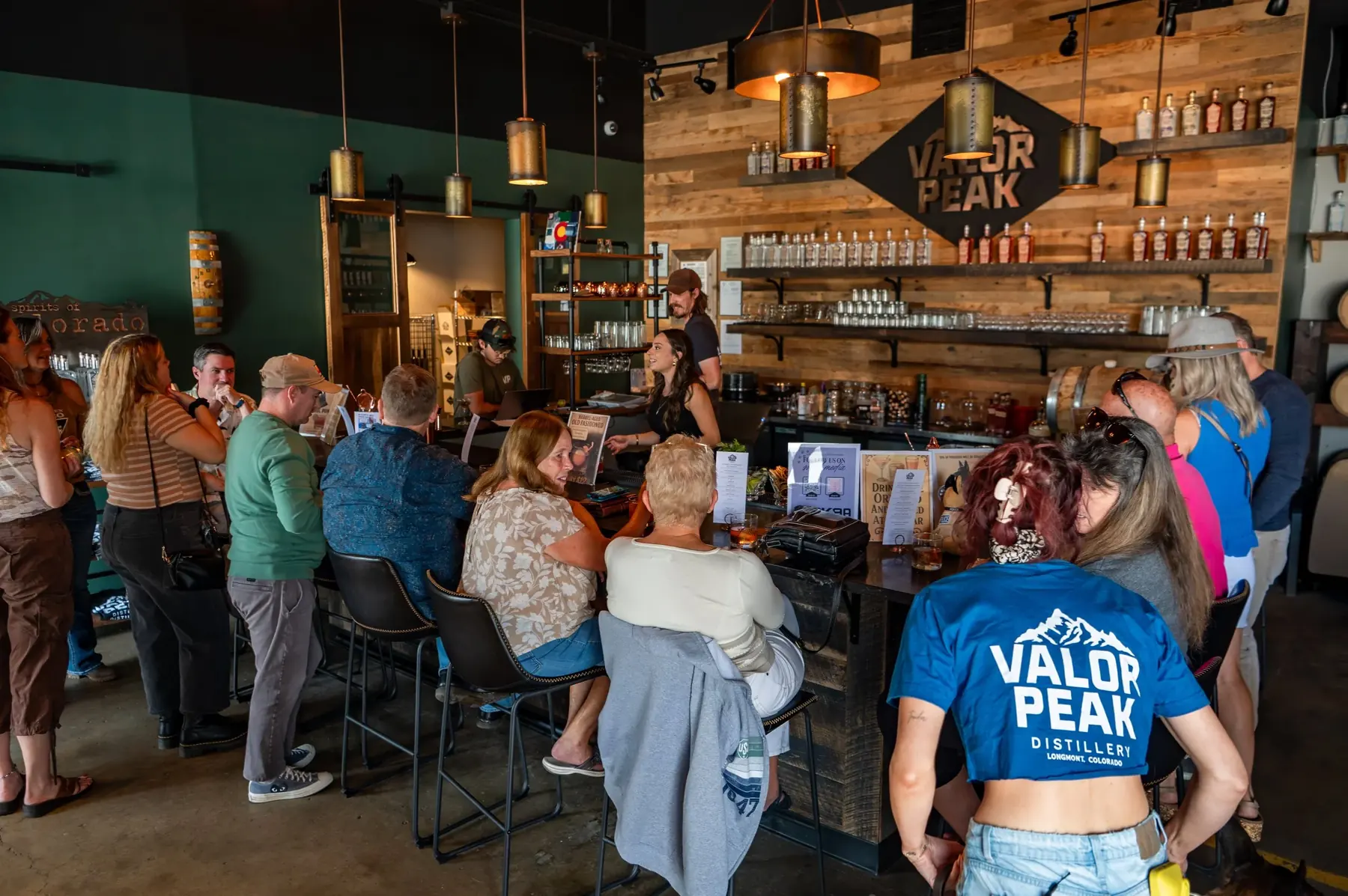
The useful distinction for a visitor is access. Can you ask who makes the spirit, what happens on site and how a particular bottle is produced? A tasting room can make those answers personal. At Valor Peak, the crew runs the Longmont room and our Grain to Glass series takes visitors through the process. Treat craft as an invitation to ask questions, not a reason to stop asking them.
What can you expect in a Colorado tasting room?
A tasting room offers a chance to explore the producer's spirits in a comfortable setting. Depending on the room, that may mean neat samples, cocktails, a flight or a conversation about bottles. Menus and availability change, so check before arriving if a specific release is the reason for your trip.
You do not need a practiced palate or specialist vocabulary. Tell the crew whether you like fruity cocktails, dry drinks, gentle flavors or a bolder whiskey. At Valor Peak, the menu includes a zero-proof option and the bar welcomes questions. Dogs are welcome, and children need close supervision. A production space is not a playground, so keep everyone away from equipment and respect the crew's directions throughout your visit.
What do you learn on a distillery tour?
A good tour connects familiar flavors to less familiar production steps. You may learn how grain becomes mash, what fermentation contributes, how distillation selects the spirit and why a barrel changes the result. The order matters because each stage influences the next. You can prepare with our whiskey-making guide without needing to memorize it.
Our First Pour Tour and Serious Sipper Tour offer ways to explore the distillery and end with a tasting. Pricing and availability are confirmed when you book. Send a request through the tours page or use the listed events email while the request form remains a preview. Do not assume a walk-in visit guarantees production access. Booking ahead gives the crew a better chance to plan a useful experience.
Which questions should you ask the distiller?
Ask which parts of a particular spirit are made on site, what grain contributes and how the crew decides a barrel is ready. You can also ask what changes when water is added or why a spirit works well in a certain cocktail. Those questions lead toward flavor and method instead of a contest over strength or age.
Be specific about the expression in front of you. A producer may make different products in different ways, so one answer should not be applied to every bottle. If you have an allergy concern, ask directly before ordering. If a detail is not confirmed on the website, do not turn an assumption into a fact. The crew's explanation is often the most valuable part of a tasting-room visit.
“A good tasting day leaves room for people, not just pours.”
What is good tasting-room etiquette?
Arrive with enough time to settle in rather than rushing a last-minute tasting near closing. Listen when the crew explains a pour and leave room for other visitors to ask questions. Follow any rules around production equipment and photos. If the bar is busy, a patient, clear order helps everyone enjoy the room.
Take small tastes and pause with water. You never need to finish a pour to prove you appreciate it. Avoid wearing heavy fragrance if you want to focus on aroma, and do not criticize someone else's tasting words. Familiar flavors are personal. Buying a bottle is optional, while respectful treatment of the crew is not. A relaxed conversation makes the room better for newcomers, regulars and the people working behind the bar.
How do you plan a day around tastings?
Put transportation first. Decide who will drive without drinking or arrange a safe ride before making reservations. Eat beforehand and leave time for food and water during the day. A tasting schedule should fit your comfort and the amount you plan to drink, not the maximum number of places on a map.
Separate outdoor activities from alcohol. Enjoy a walk or a scenic outing earlier, then return to town for food and a tasting-room visit. Check weather, opening hours and booking requirements close to your trip. Our Visit page gathers the Longmont hours, location and practical details. If your plans change, contact the crew rather than arriving expecting an unconfirmed tour. A simple itinerary leaves room for the conversation you came to have.
Why are Longmont and the Front Range a useful base?
Longmont puts downtown exploration, parks and Front Range scenery within a practical visit plan. Main Street offers a walkable setting for browsing and food, while the St. Vrain Greenway gives you a different pace outdoors. Mountain views add a sense of place without requiring every visit to become a major mountain excursion.
The Front Range is a varied region rather than one compact neighborhood, so allow time for travel and avoid guessing traffic. You can spend a satisfying day in Longmont without rushing between far-apart stops. Our things-to-do guide suggests a few flexible approaches. End with Valor Peak at 110 Emery Street, Suite C, and arrange your ride from the tasting room before the evening begins. Check our map link for the actual route.
How can Valor Peak help you explore the scene?
Valor Peak is a veteran-owned, crew-run craft distillery in Longmont. Exploring our spirits offers a range of starting points, from whiskey to gin and vodka. Our process pages and illustrated Grain to Glass journey help you connect those choices to the work behind them. The crew can explain what is pouring now without expecting you to know the terminology.
A visit can be a tour, a cocktail or a relaxed conversation at the bar. Weekly gatherings add another reason to return, with current details on our Events page. Browse the menu before arriving, especially if your group includes people who prefer a zero-proof drink. Colorado's craft scene is about people as much as bottles. A thoughtful visit to one welcoming room is a strong first chapter, not a lesser version of a bigger itinerary.
What else should you know?
Do I need to book a tasting-room visit?
Check the Visit page and contact the crew about your plans. Tours need confirmation, and a walk-in bar visit does not guarantee a tour or a particular seasonal pour.
Can I visit if I do not drink alcohol?
Yes. Valor Peak offers zero-proof choices and a welcoming room. Ask about the current menu. You can learn about production without making alcohol consumption the goal.
How many tastings should I schedule?
Choose a modest plan based on safe transportation and your comfort. Leave time for food, water and conversation. There is no useful universal number of stops for every visitor.
Do small distilleries make everything on site?
Do not assume that from the word craft. Ask how the particular expression is produced. Clear information about ingredients, distillation and maturation matters more than a broad label.